
Cinematic 2013 in review: record-breaking production and rates, digitalised movie theatres and international festival successes
Feature fiction film production scores record-breaking figures in the history of Croatian cinema. The same goes for Croatian films in national distribution, attracting 443,539 viewers to theaters. The independent cinema digitalization project was successfully completed, with the percentage of digitalised screens becoming one of the highest in Europe. Croatian titles counted more than 100 screenings on international film festivals.
Film production in 2013
In 2013 a total of 16 feature-length fiction films were completed and shown, which is thus far the largest number of produced films ever in the history of Croatian cinema. Of the mentioned number, 12 were co-funded by the Croatian Audiovisual Centre. There are currently seven feature titles at different stages of post-production and the next year will bring the making (or the continuation) of another dozen titles. In 2013, 10 feature fiction minority co-productions were screened, 12 feature documentary films were made (eight of which majority Croatian productions), and another 52 short films of all genres: 9 fiction, 15 documentary, 11 animated and 17 experimental films. Another 40 are currently going through post-production, and 51 short films are currently in different phases of making.
At the public call for audiovisual production stimulation in 2013 seven feature fiction films were selected, with a dominant share of films by female authors and debut films, and two completed titles were chosen for co-funding. In other categories grants were given to 31 projects: four short fiction, seven feature documentary, six short documentary, six animated and eight experimental films. Eleven co-production with a minority Croatian share were backed, four of which feature fiction, three documentary, three short animated and one short fiction film. The screenplay development stimulation and feature fiction and documentary project development category in the first and second round of decision-making approved a total of 18 projects for screenplay development (eight fiction and 10 documentary), while 11 projects were selected for the project development (five fiction and six documentary). The results of this year’s second round of 2013 Croatian Audiovisual Council’s call for entries will be made public in 2014.
Croatian film distribution
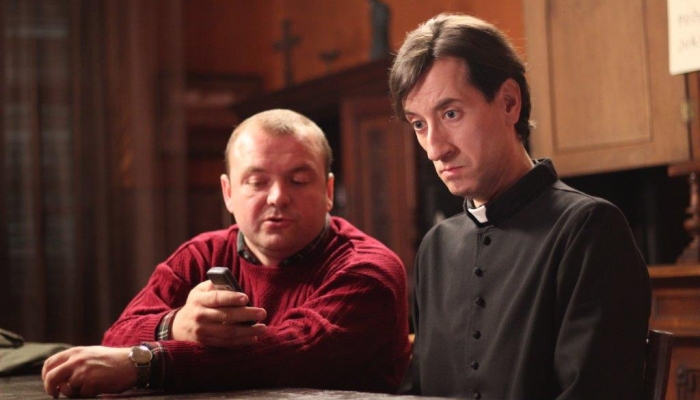
The total number of viewers who saw a Croatian film in 2013 amounts to 443,539 (some films are still in distribution). The most popular was the comedy The Priest’s Children by Vinko Brešan (Interfilm), distributed by Continental film, whose 158,130 sold tickets made it the most viewed Croatian film in the 21st century. The runner-up is The Brave Adventures of a Little Shoemaker by Silvije Petranović (Maydi Film), distributed by Blitz film & video, still shown in theatres. By the making of this text, it reached the number of 126,366 viewers.
It is followed by The Mysterious Boy by Dražen Žarković (Kinorama), distributed by 2i Film, which attracted 68,969 viewers, and the romantic comedy Sonja and the Bull by Vlatka Vorkapić (Interfilm), distributed by Duplicato, with its 97,927 viewers (38,682 this year). Good results were also scored by Cowboys by Tomislav Mršić (Kabinet, distributed by Blitz film & video), reaching 33,367 viewers.
Bearing in mind the fact that in the last twenty years the average numbers achieved by the Croatian film have been more than ten times smaller (around 30,000 viewers per year), it is quite obvious that for the last two seasons in a row the national rates have exponentially increased in comparison to the previous situation.
Two Croatian films have also been distributed outside Croatia and the region. The local blockbuster The Priest’s Children will be presented in the listings of theatres in Italy, Norway, Poland, Spain, Sweden, Brazil, South Korea, USA and Iceland. WIDE Management is in charge of its international distribution. The feature documentary film Sofia’s Last Ambulance by Ilian Metev (Croatian co-producer Nukleus film) was distributed in Germany, and a nomination for the Cinema Eye award in the best debut film category, presented by the namesake organisation with headquarters in New York City, might open the door of US distribution.
Incentive scheme and screen tourism
In 2013 the Croatian Audiovisual Centre received applications from five projects for incentive measures regarding audiovisual production. The projects that drew most attention were the fourth Game of Thrones season (UK) and A Patriotic Man (Finland). What is specific about the incentive measures is that they are intended for a cultural product (in this case – audiovisual activity), but also that they directly stimulate the development of all other related industries (tourism, hospitality, transportation etc). The film industry contributes to the economy, the volume and efficiency of the state’s fiscal income, as well as countless other factors beyond the standard multipliers – promotion of the Croatian culture of living, promotion of Croatia as a travel destination, support to exporters and an increase in sale of other goods and services. Also, attracting foreign productions makes it possible to expand the human and technical potential in Croatia, which is a prerequisite for the further growth and development of the local audiovisual industry.
With that in mind, on 23 October 2013 representatives of the Croatian Audiovisual Centre organised two presentations before several parliamentary committees. The first was an expert report compiled by the Institute of Public Finance on Economic and Fiscal Effects of Audiovisual Activity and Government Incentives, presented by professor Anto Bajo, PhD, which showed that every kuna paid through incentives in the audiovisual sector returns between 1.5 and 2.3 kuna to the state budget. A screen tourism project was also presented by Juliane Schulze, senior partner in Peacefulfish consultancy. Her speech focused on good practice examples from the countries that achieved significant results in the popularisation of destination tourism thanks to films made there. She also made an overview of Croatian prospects for the development of screen tourism, especially in the light of the incentive scheme and recent international productions made on the Croatian territory. Mrs Schulze pointed out that Google search engine received 1,570,000 requests for Game of Thrones Croatia and that since the show was seen by 14.2 million viewers, the same number of people registered the locations. These figures show that international projects made in Croatia help the global visibility of Croatia in a way that is unparalleled to anything before.
Some of the hypotheses from Mrs Schulze’s presentation were confirmed on 16 October, when an article under the title 19 Movie Landscapes You Can Totally Visit on buzzfeed.com, with over 80 million monthly visits, included Dubrovnik on its list of 19 film locations which are also popular travel destinations (Hobbiton in New Zealand, Ohio State Prison where The Shawshank Redemption was made, Tunisia from The Star Wars etc). The Croatian incentive scheme and its results were also a topic covered in the Financial Times and its report on Central and Eastern Europe’s film industry. On 11 December, Bloomberg TV channel aired occasionally throughout the entire day a three-minute story ‘Game of Thrones boasts film tourism in Dubrovnik’.
International festival success
In 2013 Croatian films registered a total of 15 A-list festival appearances. The greatest success stories include the premiere of A Stranger by Bobo Jelčić (Spiritus Movens), the Serbian-Croatian-German-French-Slovenian co-production Circles by Srđan Golubović (Croatian co-producer Propeler Film) in 63rd Berlinale’s Forum section, and as many as six Croatian films in the selection of the 48th Karlovy Vary International Film Festival. The presence of Croatian film goes strong in festivals dedicated to short film as well. Đuro Gavran’s The Verdict (Pipser) and Jagoda Kaloper’s Behind the Looking Glass (Factum) were shown at the 42nd International Rotterdam Film Festival, the animated omnibus Father by a group of authors, co-produced by Bonobostudio was screened in competition of the 35th Clermont-Ferrand International Film Festival, and Mare Šuljak’s Site Selection (Kinoklub Zagreb) appeared in the competition selection of the 59th Oberhausen International Film Festival.
Award-wise, similar to 2012, 2013 also saw the success of Croatian minority co-productions. Circles won the jury’s Special Mention at the 29th Sundance Film Festival and the Ecumenical Jury Award at the Berlinale. The Slovakian-Czech-Croatian co-production Velvet Terrorists by Peter Kerekes, Ivan Ostrochovsky and Pavol Pekarčik (Croatian co-producer Nukleus film) premiered at the 48th Karlovy Vary International Film Festival and won the FEDEORA Award presented by the Federation of Film Critics of Europea and the Mediterranean.
The Priest’s Children was also nominated for the European Film Award in the best European comedy category, and Circles were nominated for the Satellite Award in the best foreign film category.
Croatian films scored good results in festivals other than the 14 largest ones. The best ‘harvest’ was those of Halima’s Path by Arsen Anton Ostojić (Arkadena Zagreb) and Circles. Other 2012 films like Father, Real Man’s Film by Nebojša Slijepčević (Restart), Winter Miracle by Željka Sukova and Gustav Beck (Croatian co-producer Udruga Ukus), and Sofia’s Last Ambulance by Ilian Metev continued their success stories in 2013. The total number of appearances made by Croatian films at other important international events amounted to over 100 festivals.
Independent cinema digitalization
Independent cinema digitalization is one of the goals listed in the National Programme of Audiovisual Promotion 2010-2014, which was fully implemented within two years. Due to the change from analogue to digital screening formats, the implementation of this project was needed for the cinema branch in Croatia to survive. The percentage of digitally equipped theatres today amounts to 87%, which means that out of 146 theatres operating, 128 of them have digital equipment installed. The high percentage of digitalised cinemas in Croatia is one of the highest in Europe.
The project was implemented by the Croatian Audiovisual Centre, Ministry of Culture and local authorities. Thanks to the unified public procurement, the company LMT d.o.o. provided contemporary digital equipment to the movie theatres at a price 30% lower than the nominal. The Croatian Audiovisual Centre drew a Contract on programme commitments for cinema operators with regular listings and cinematheques, defining the number and quality of screenings, percentage of screenings and titles of national, European and independent film, educational programmes, children’s programmes and other digital contents, as well as promotion of cinema-related activities. The programme commitments were drafted in accordance with the project aims, i.e. an increase in the rates of European, Croatian and independent international titles in theatres and enrichment of the diversity of cultural offer in Croatian cities and towns.
The completion of the independent cinema digitalization project was symbolically marked on 10 October 2013 with a joint screening of Cowboys. The central event took place in Kutina and was attended by the representatives of the Ministry of Culture, Croatian Audiovisual Centre, Mayor of Kutina and the Cowboys film crew.
The year ended with another common action. On the winter solstice (21 December) the Croatian Audiovisual Centre and cinemas joined the international event Le jour le plus court intended for the promotion of the short film. The Shortest Day of the Year 21/12 – The First Short Film Marathon took place in 26 independent cinemas across Croatia, and HRT3 also joined the initiative. The line up included a selection of Croatian and international short film production. Such initiatives aim to stimulate networking between independent cinemas and at the same time represent new working models, which is something the Croatian Audiovisual Centre will continue to work on in 2014.